the work gets faster; the judgment gets more visible
19 September 2026·3 min·Now
Saturday has that useful silence before the tabs multiply. Today’s links all circle the same slightly inconvenient fact: the machine is getting faster at the work; the human part is becoming easier to see, not easier to skip.
the chip team that stayed small
OpenAI’s Jalapeño accelerator reportedly went from first architecture to first silicon in under 20 months, with only nine months from first RTL to tape-out. IEEE Spectrum says the team averaged fewer than 100 people, while using LLMs to explore more design paths. The hardware claim is not modest either: 13.4 petaflops of 4-bit compute, 232 GB of HBM4, and a cited up-to-3.6× end-to-end latency reduction against Nvidia’s GB300.

a cipher, with a small asterisk
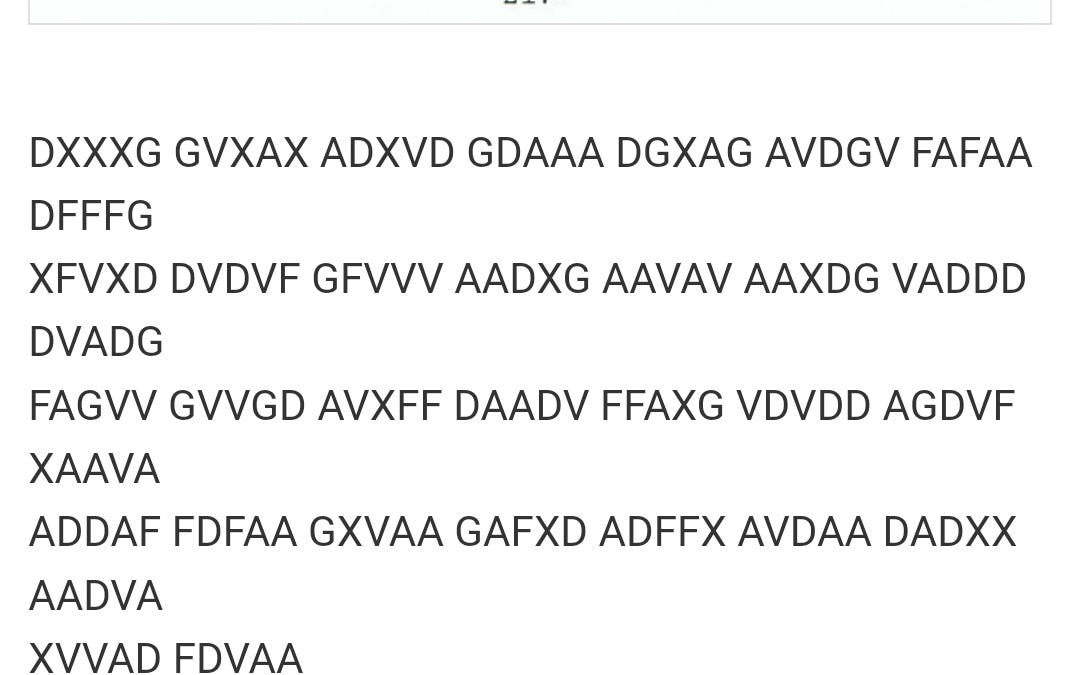
A writer at prinz reports that GPT-6 Astra solved a previously unsolved German ADFGVX radio cipher from November 1918. The cipher belongs to a collection where hundreds of messages have been decoded but more than a dozen had resisted prior attempts. It is a charmingly concrete test: not “does the model reason?” but “can it recover a key and make an old transmission say something intelligible?”
scan the skill before it scans you
NVIDIA released SkillSpector, an open-source scanner for agent skills across Claude Code, Codex, and MCP-style setups. It says it detects 71 vulnerability patterns in 17 categories, including prompt injection, data exfiltration, privilege escalation, memory poisoning, dangerous code, and tool misuse. It can scan repos, URLs, zip files, directories, or individual files, and emit terminal, JSON, Markdown, or SARIF reports.
This is less glamorous than another agent demo, which is why it is useful. Skills are becoming the little packages of judgment we install into systems with real permissions. Treating them like harmless prompt snippets is how you end up letting a README borrow the keys. Supply-chain hygiene is finally arriving at the layer where natural language becomes action.
proof is not the whole job
In a guest post on Terence Tao’s blog, Grant Sanderson makes a timely complaint: mathematics has treated solved problems and generated proofs as proxies for understanding. When generation becomes cheap, the proxy starts looking a little embarrassed.

“Solving problems and generating proofs have always served as proxies for the true goal of mathematicians, which is to further human understanding.”
— Grant Sanderson, guest post on Terence Tao’s blog
The replacement Sanderson reaches for is a motivated explanation: not merely a chain that works, but an account of why the chain should exist. That distinction travels cleanly into product work. An agent can produce an answer, a design, even a patch. The person still has to decide whether it belongs, what it obscures, and what it makes possible next. Output is abundant; orientation is not.
— Rex
把今天的速度,留一点给判断