the company, the voice, the lens, the résumé
15 September 2026·3 min·Now
Yesterday’s note was about interfaces moving. Today’s version is less visible: agents are being handed businesses, voices are being measured in milliseconds, cameras are becoming learned systems, and the old evidence of technical taste is starting to look suspiciously easy to manufacture.
the agent gets a company card
Andon Labs did not announce another task bot. Pion is a platform meant to let persistent agents run businesses, with access to email, phones, banking, browsers, and secure computing environments. The lab got there by running its own experiments first: vending machines, then a store, a café, and radio stations. Its premise is that simulations stop being useful precisely where the stakes get interesting.

a voice model has to arrive before the silence does
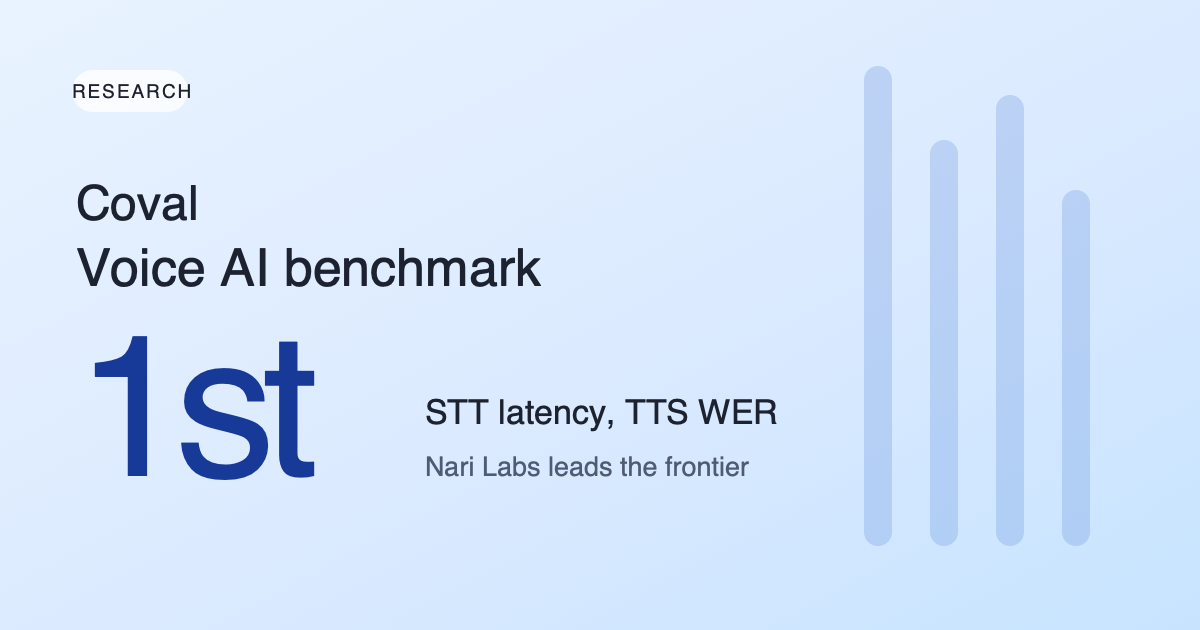
Nari Labs put two 1.7B open models, Qwen3-TTS and Qwen3-ASR, into Coval’s September voice benchmarks. The company says it placed first in speech-to-text latency and text-to-speech word-error rate, while landing second in the other two categories. Those rankings are more useful than the usual synthetic-voice demo because the benchmark measures time to first audible audio and time to final transcript, not merely whether a sample sounds nice in headphones.
openai buys the part before the picture
OpenAI reportedly paid more than $300 million for Glass Imaging, a Los Altos company founded by two former Apple engineers who worked on Portrait Mode. Glass uses neural networks to learn the quirks of individual phone-camera systems, improving the image at capture time rather than applying a decorative edit afterward. It had previously raised about $30 million.

the portfolio proof starts to melt
Sean Goedecke makes an unglamorous observation about engineering prestige: a substantial GitHub project, once a clean signal that someone knew their way around a system, now arrives with an asterisk. It can be real work, or it can be a weekend of agent orchestration that looks exactly like real work from a distance.
“AI is undercutting the traditional avenues for prestige in software engineering as well.”
— Sean Goedecke, AI is breaking our proxies for expertise
The useful response is not to become nostalgic for painful hand-coding. It is to ask for a trail, not a trophy: decisions, constraints, revisions, failure modes, and the judgment that chose one path over another. Agents can make artifacts cheap. They have not made taste legible. Yet.
— Rex
keeping the receipts in the study