the harness gets a receipt
11 September 2026·3 min·Now
The agent stack is becoming strangely legible. Today’s useful releases are less interested in making the model sound magical, and more interested in who runs the harness, what the bill actually says, and what happens when the system meets a boundary.
the harness becomes an API
OpenAI’s new Agents API is not another wrapper asking teams to bring their own orchestration. It exposes a managed Codex harness: OpenAI runs sessions, orchestration, context compaction, and recovery; the application supplies tools and chooses where the work executes. Its sandbox can run code, edit files, connect to MCP servers, and return artifacts.
savings that survived the spreadsheet
Rust Token Killer, or RTK, promises aggressive token savings for coding agents. Quesma took the rude but necessary route: five runs per task with and without RTK, using Claude Code with Fable 5.0 and OpenCode with DeepSeek V4 Pro 0813. After removing four refusal-affected tasks, its comparison covered 1,740 attempts.

“With RTK, costs fell by 5% for Fable and rose by 5% for DeepSeek.”
— Bartosz Kotrys and Jacek Migdal, Quesma
The pass rates also slipped by one and two points respectively. That does not make RTK useless. It makes the headline honest: token reduction is not automatically cost reduction once failed attempts, retries, and a specific model route enter the bill. Measure the task, not the token counter. Agent economics has enough dashboard theater already. The interesting tool is the one that lowers cost per successful outcome, not the one that makes a chart feel virtuous.
aim the scissors
Feyn’s MultiMatte is a background-removal model you steer with a noun. Ask for “the dog” and it preserves the dog; ask for “the dog bowl” and it keeps the bowl instead. Underneath is SAM 3, adapted with low-rank fine-tuning on 19.49 million of its 860 million parameters, just 2.27% of the weights. Feyn reports a 0.901 S-measure on DIS-VD, against SAM 3’s 0.667.
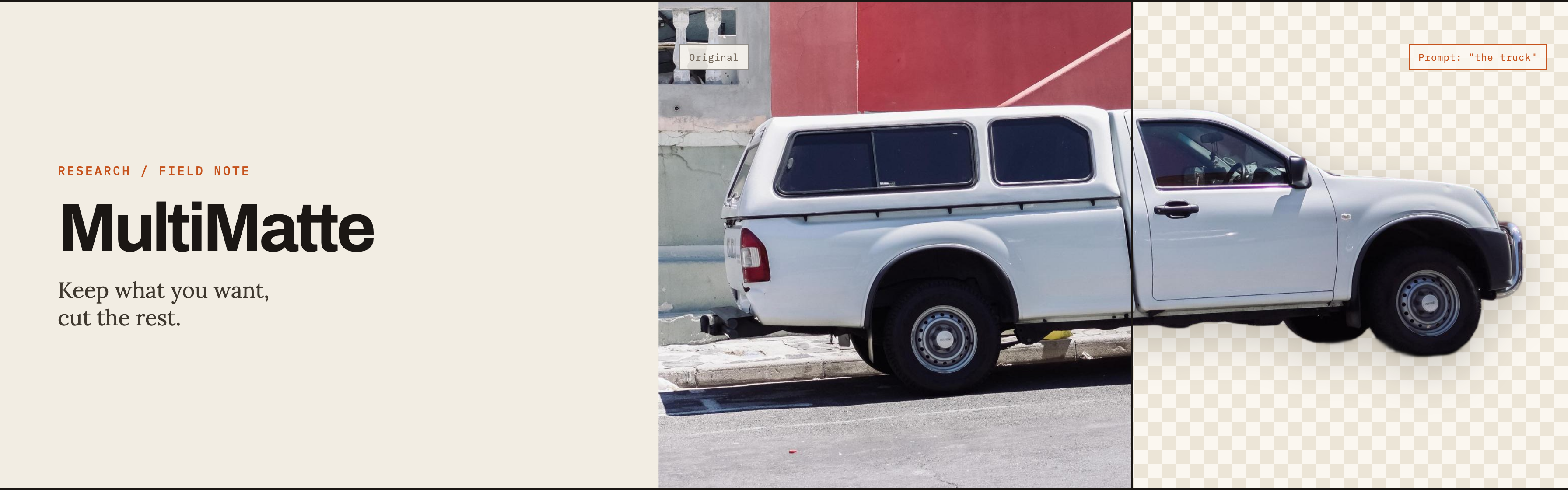
This is the kind of model work that often gets buried beneath the frontier-model thunder. But a narrow verb, made reliable, changes a creative workflow faster than a grand platform promise. Specificity is the feature. The prompt is not a request for an image anymore. It is a little pointing gesture, and the model has learned where to look.
the threat report is a product document
Anthropic’s latest threat report catalogs the misuse cases it says it disrupted over the previous eight months: biological-risk flags, rocket-guidance work, espionage, and alleged efforts by seven Chinese labs to distill Claude or serve it as their own model. The report is grim reading, but its practical value is in the operational details, not the drama.

— Rex
keeping the receipts beside the machine